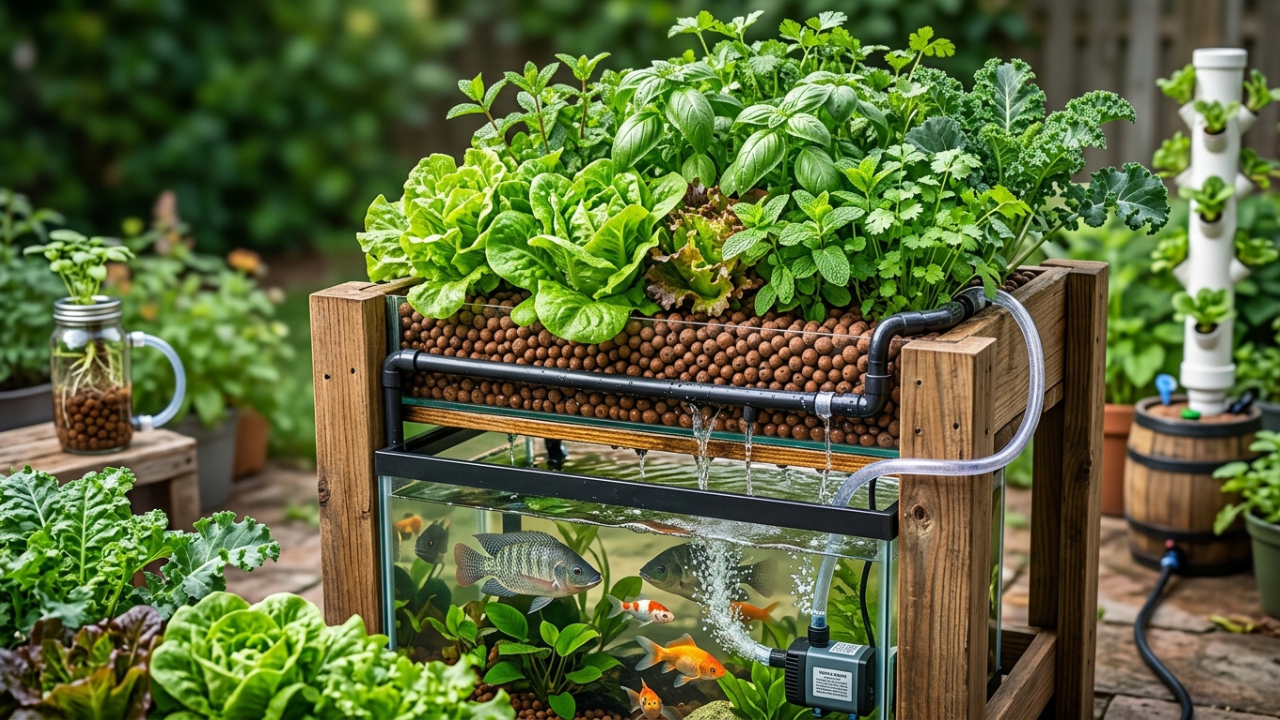
I've built more aquaponics systems than I can comfortably admit to failing at — starting with a plastic tote and a cheap pump on my balcony, and eventually working my way up to a proper media bed with a bell siphon I'm actually proud of. Along the way I've tried, borrowed, and adapted a lot of different builds. This list rounds up 15 of the easiest, most beginner-friendly aquaponics projects I've either built myself or seen work reliably for other first-timers, roughly ordered from smallest and simplest to bigger weekend projects.
Before You Start: The One Thing That Matters Most
Every single idea below depends on the same foundation: cycling your system properly before you stock it with fish you actually care about. This means letting beneficial bacteria build up in your grow media to convert fish waste (ammonia) into nitrite and then nitrate, which is what your plants actually feed on. Budget at least four weeks for this, and don't rush it — my very first system failure came from skipping this step, not from a bad build.
With that out of the way, here are 15 ideas worth trying.
1. Mason Jar Aquaponics

This is the true entry point into aquaponics — a wide-mouthed quart or half-gallon jar holding a small net cup of plant media in the neck, with a betta or small fish living in the water below. It sits on a kitchen counter, costs almost nothing to build, and is a genuinely good way to learn the basic mechanics before committing to anything bigger.
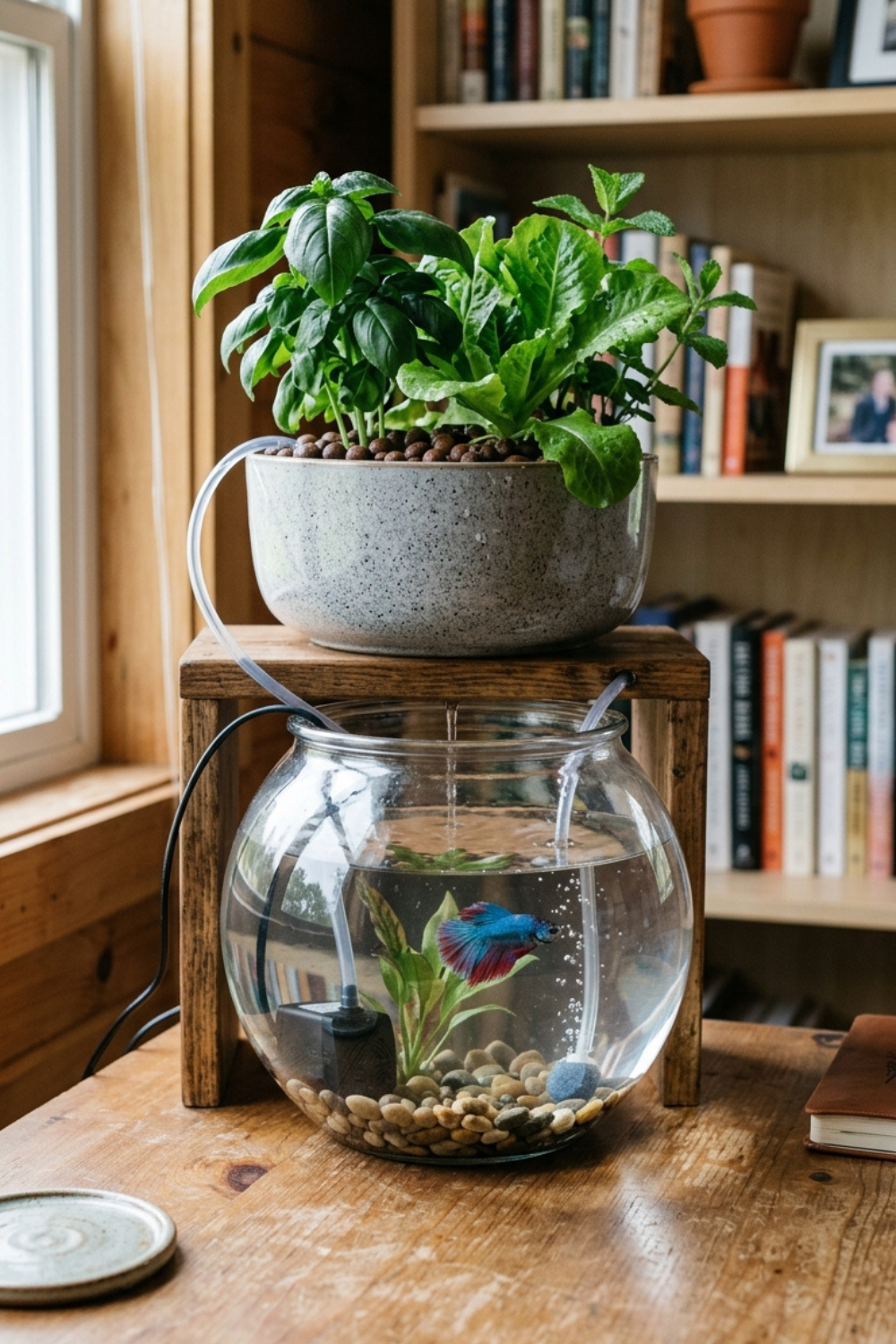
2. Fishbowl-and-Planter Combo
Take any fishbowl and pair it with a small grow container plumbed above it. Water pumps up to the plants, filters through the media, and drains back down to filter the fishbowl water. It's compact enough for a desk or bookshelf, and I've seen versions built purely for looks that still function as a real, if small, aquaponics loop.
3. Water Bottle Bell Siphon Build
If you want to actually understand how a bell siphon works, cut one from plastic water bottles instead of buying one. The larger bottle becomes a media guard, punched with holes near the bottom, while a smaller inverted bottle forms the siphon itself. It's the cheapest way I know to prototype the plumbing mechanics of a bigger system before committing real money.
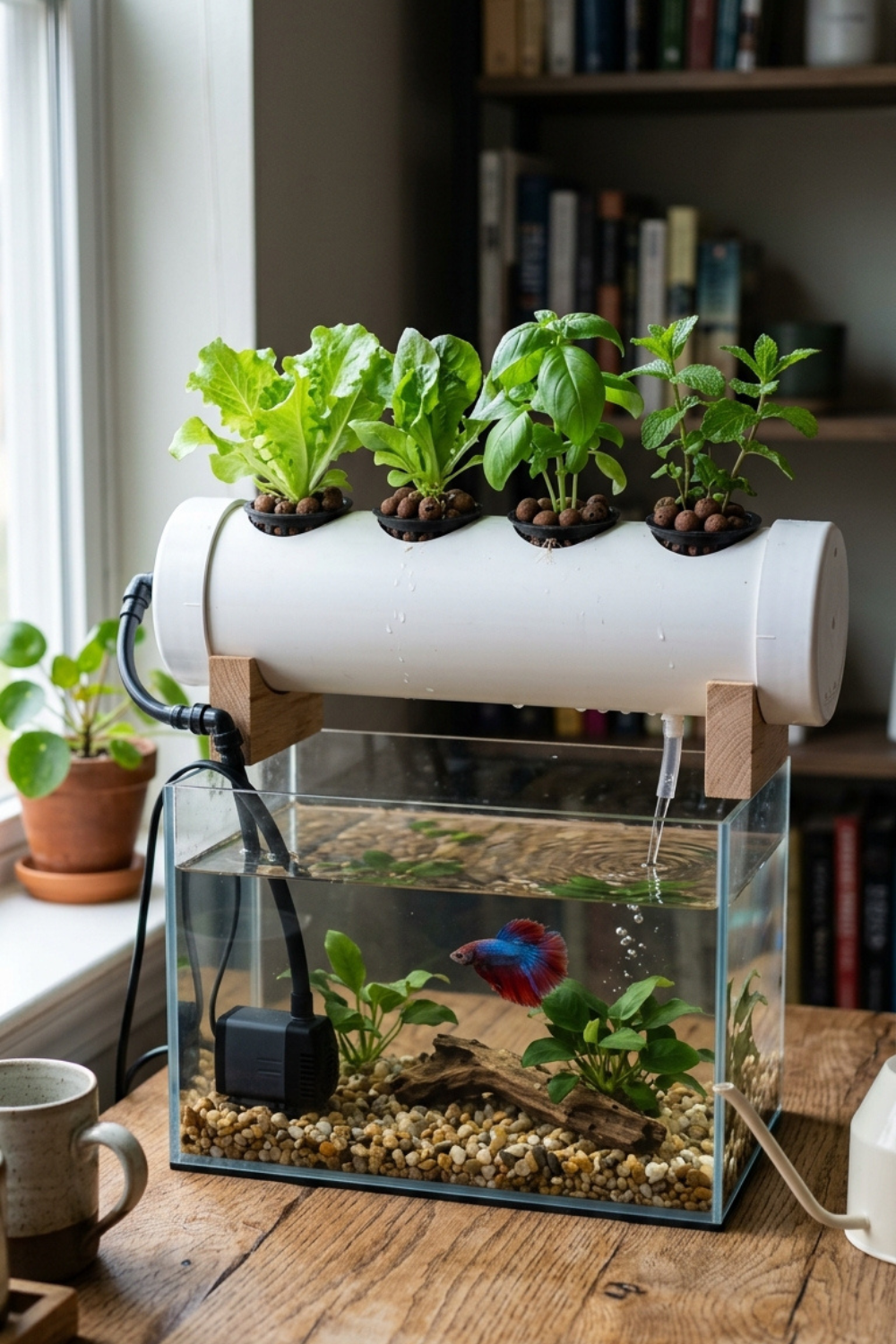
4. PVC Pipe Micro Aquarium Bed
A short length of PVC pipe with end caps makes a simple, sealed hydroponic grow bed that sits above a small aquarium — I've seen this done well with tanks as small as 10 liters. It's about as minimal a plumbed system as you can build and still call aquaponics.
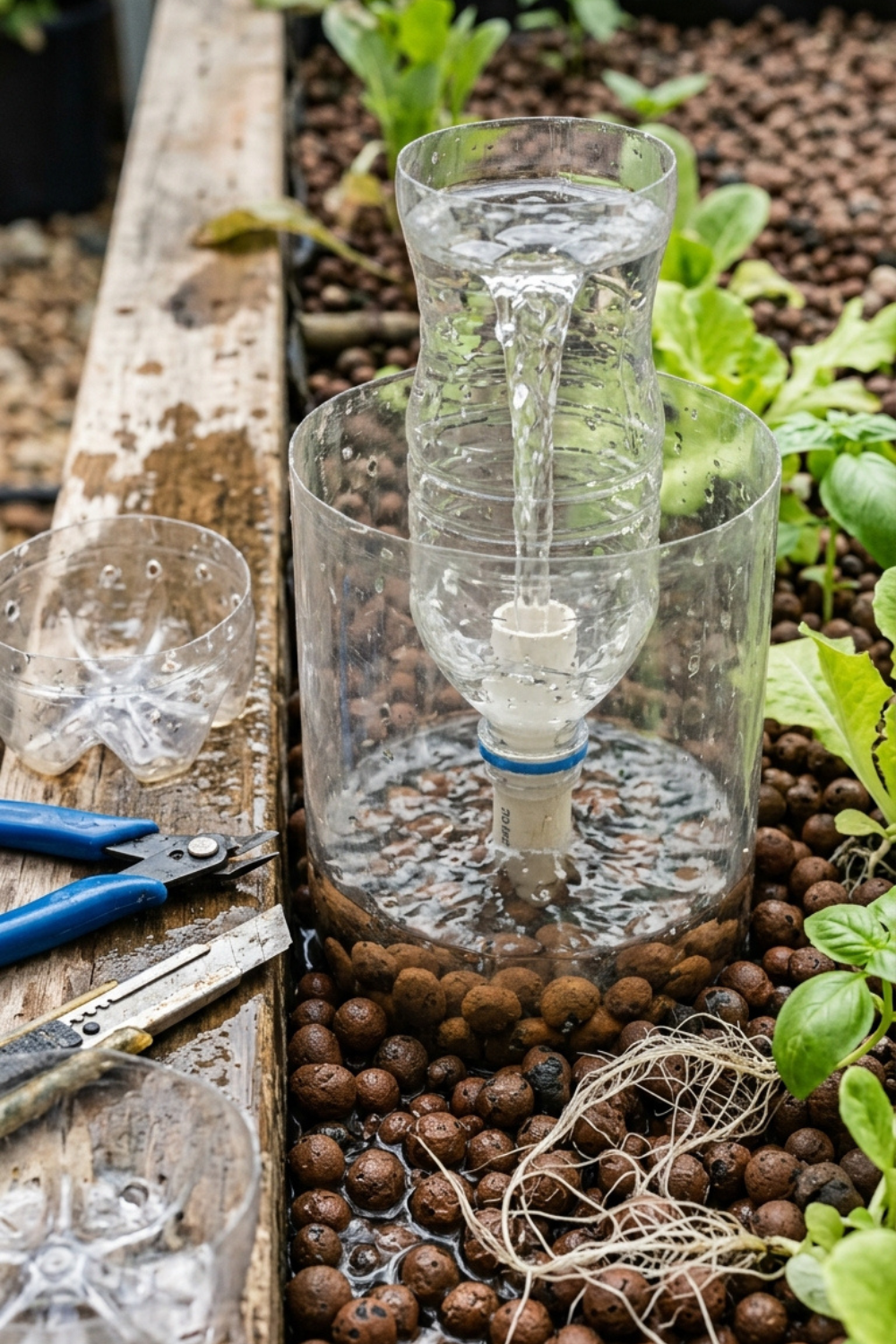
5. 30-Gallon Tote and Grow Bed
This was close to my own first real build: a 30-gallon plastic storage tote as the fish tank, paired with a smaller plastic tub as the grow bed on top or beside it. It's sized right for a small balcony or porch, cheap to source, and forgiving if your first attempt at plumbing isn't perfect.
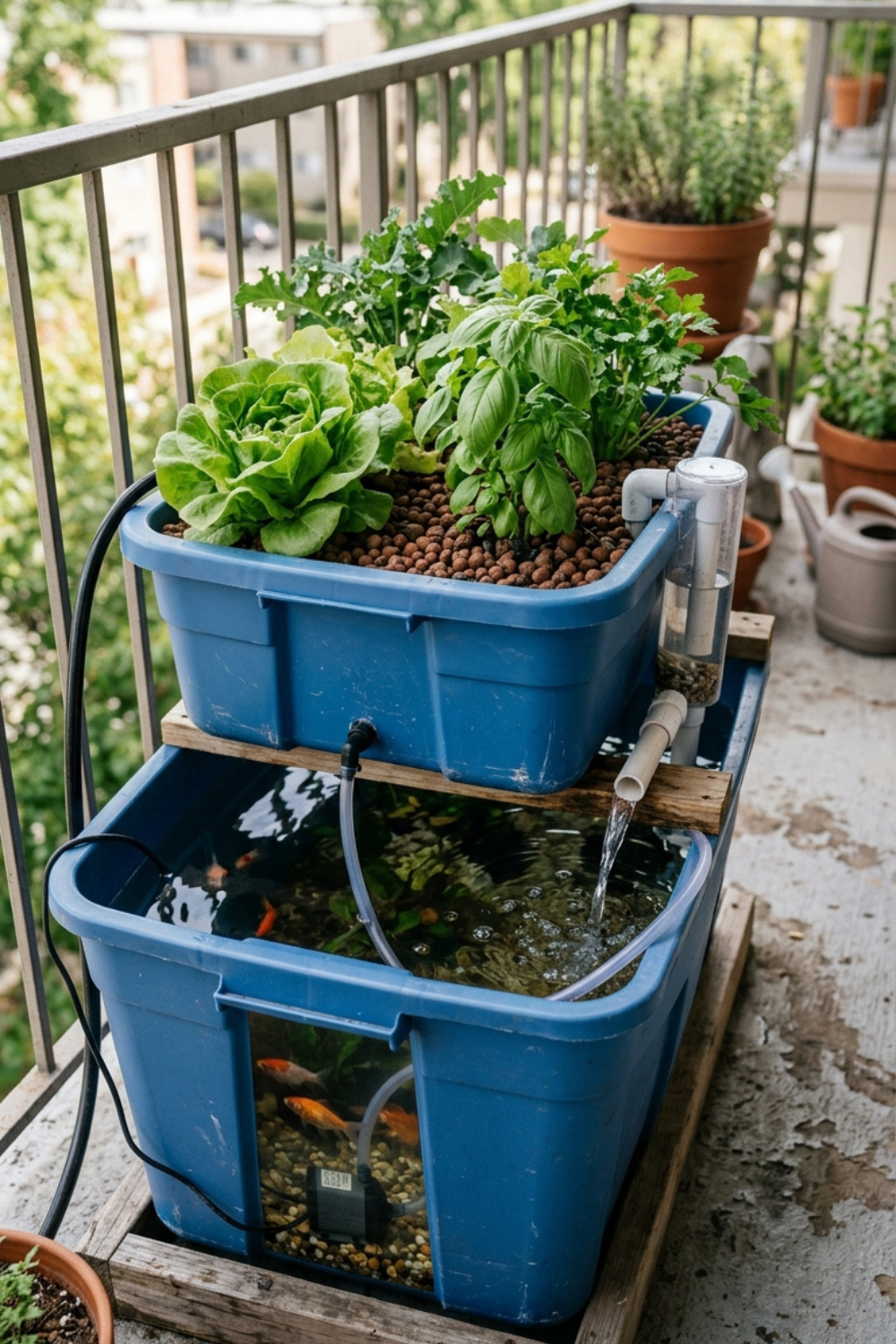
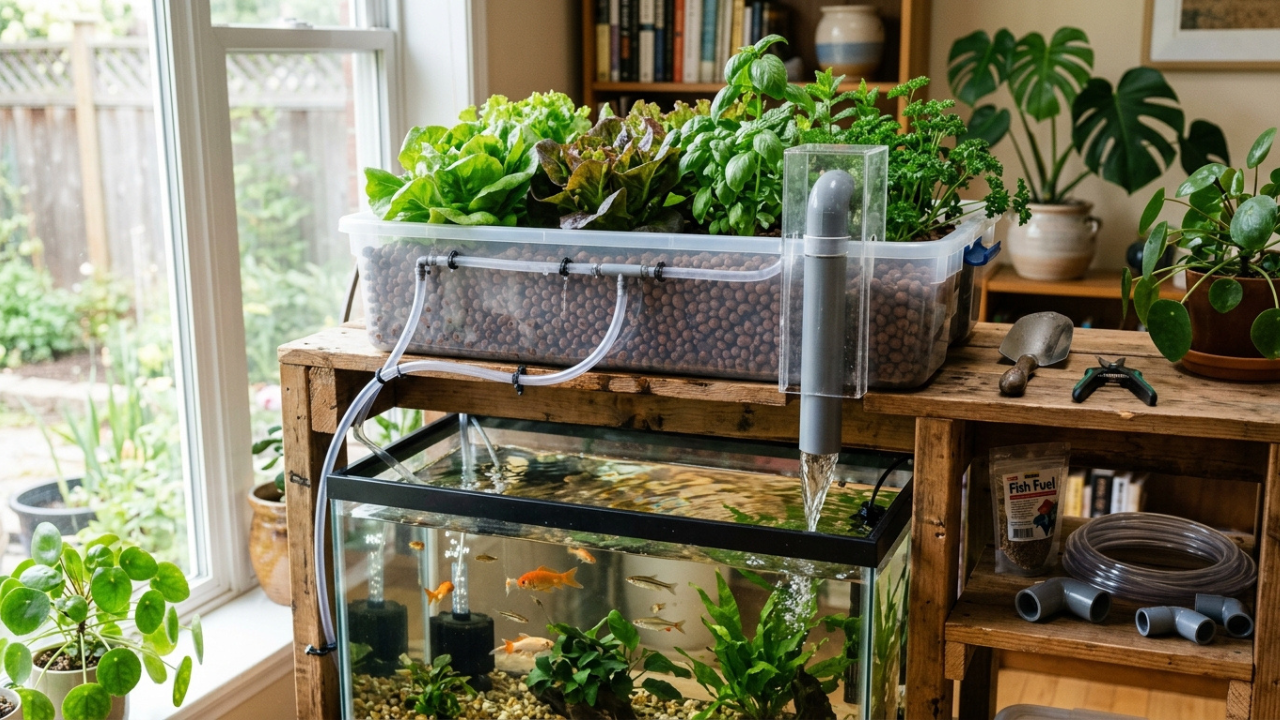
6. Standard 10- or 20-Gallon Aquarium Conversion
If you already own an aquarium gathering dust, this is the cheapest possible starting point. An over-the-tank grow bed sits directly on the rim of the aquarium, acting as both a biological filter and a small vegetable garden. The one real challenge is matching your pump's flow rate to the drainage of the grow bed — too fast, and you'll flood your floor, which is exactly why a working bell siphon or standpipe overflow matters here.
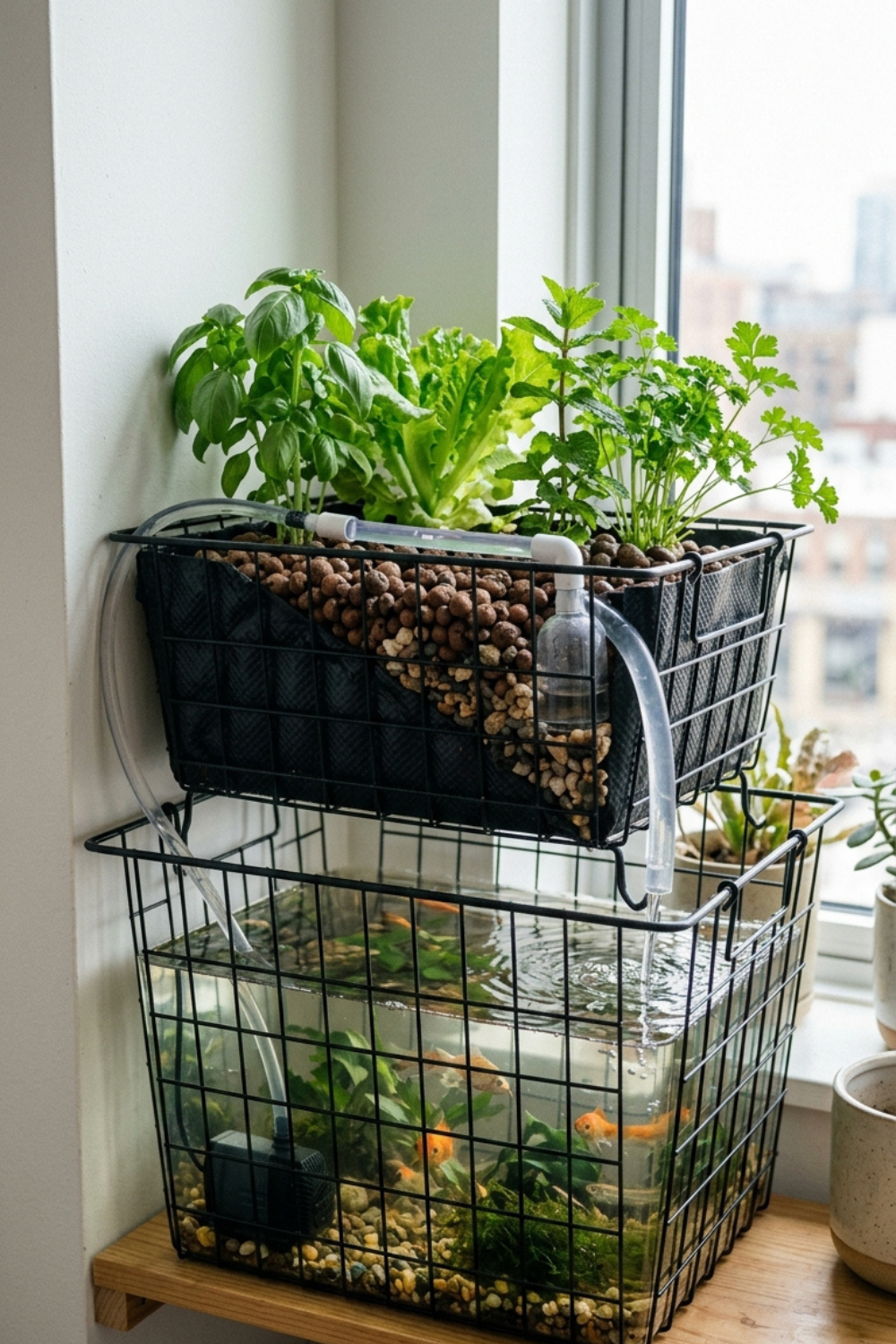
7. IKEA Wire Basket System
A clever, small-footprint build using two IKEA-style wire baskets — a smaller one on top for plants, a deeper one below for fish — connected by a corner pump and a simple siphon. Its compact size makes it a genuinely good option for apartments where floor space is tight.

8. Window Planter Box on an Old Aquarium
If you've got an old aquarium and a spare window planter box, this pairing makes a neat, light-friendly setup. A bell siphon regulates the water flow between the two, and because it sits at a window, your plants get natural light without needing a grow lamp.

9. IKEA Shelf Fish Tank Setup
Fit your fish tank into the base of an IKEA shelving unit and place a grow box on the shelf above it to grow plants hydroponically. This is one of the more space-efficient designs I've come across for anyone trying to combine aquaponics with existing furniture rather than dedicating a whole new footprint to it.

10. Pond Liner and River Pebble Bed
Build a plant bed using flexible pond liner shaped into a container, filled with river pebbles as your growing medium. It's a good option if you want a custom shape or size that doesn't fit a standard tub, since the liner adapts to whatever frame you build around it.
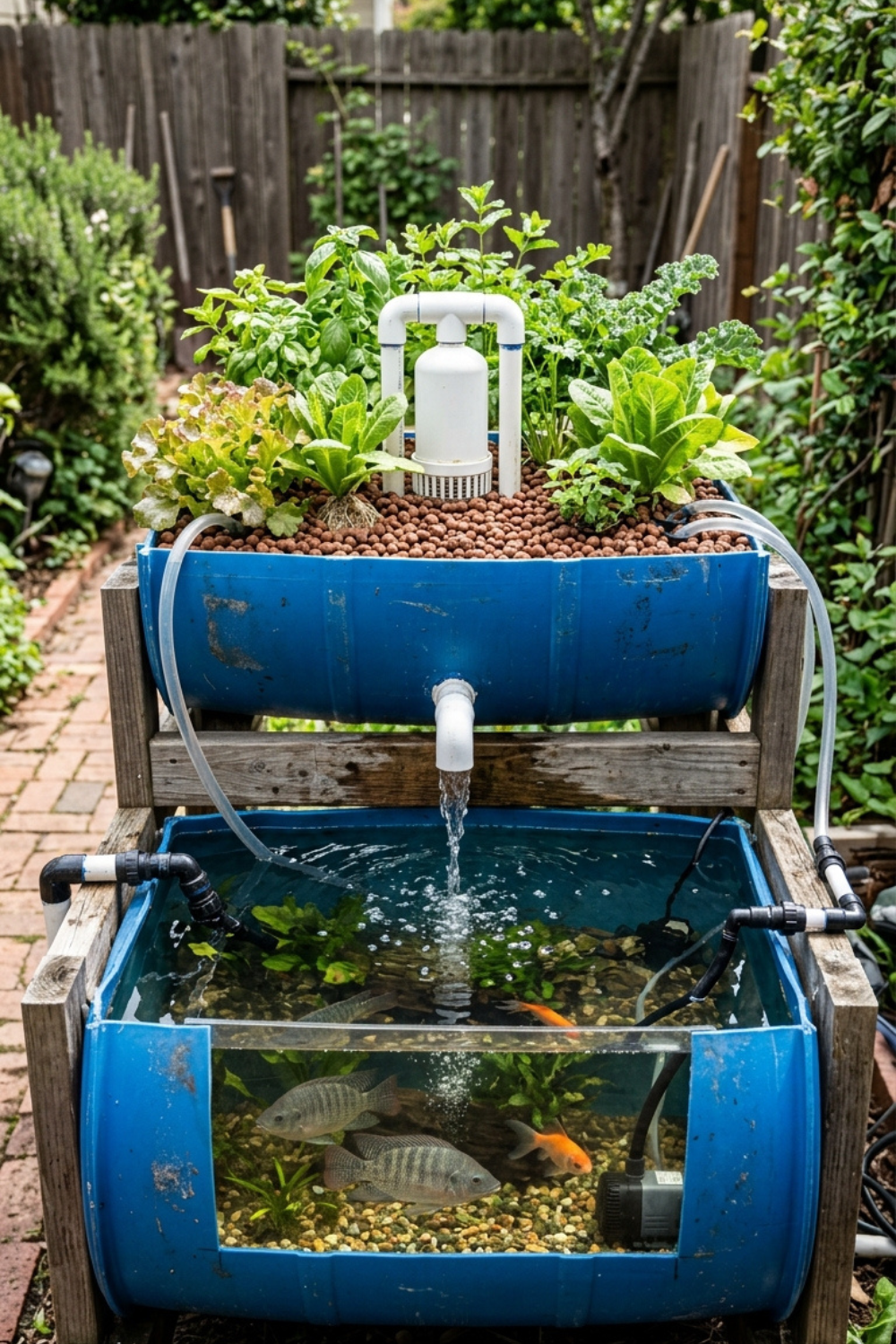
11. Vertical Wall-Irrigation System
This design uses water pumped from the fish tank to irrigate a vertical planting wall, rather than a flat grow bed. It's a smart way to grow more in a small footprint, and it looks genuinely striking if you care about the system doubling as home decor.

12. Cut 55-Gallon Barrel System
A larger step up: a 55-gallon plastic barrel cut into two sections, with roughly two-thirds used as the fish tank and the remaining third converted into the grow bed. This is a good "next project" once you've run a smaller tote system and want more volume and stability without going as big as an IBC tote.

13. IBC Tote Conversion
A food-grade IBC (intermediate bulk container) makes an excellent larger system once you're past the beginner stage but still want something manageable. Cut and reconfigured, it gives you real growing capacity and is a popular choice for anyone converting a corner of a backyard into a proper mini aquaponics setup.
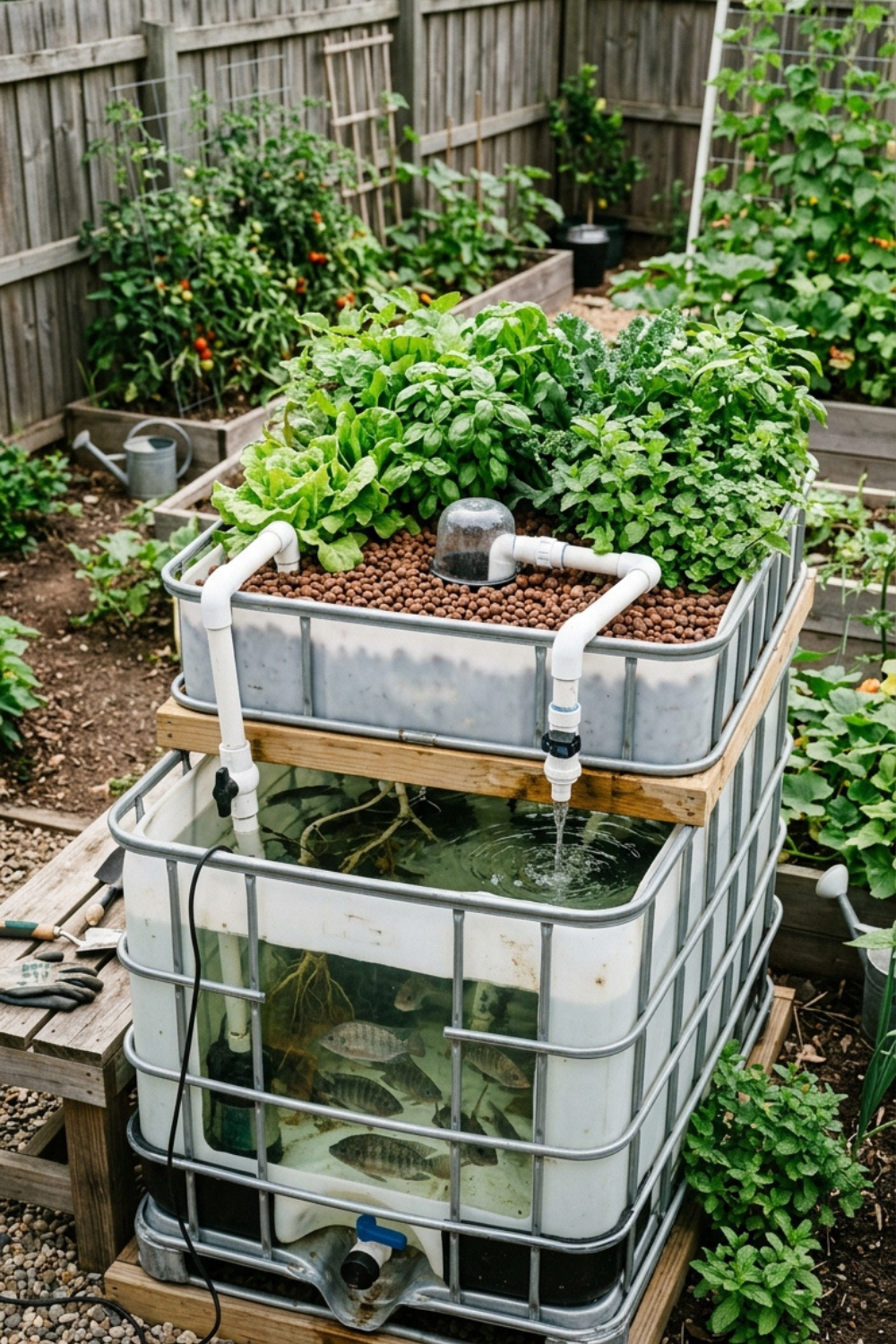
14. Stacked Barrel System With Shared Bell Siphon
Multiple grow beds, each made from cut barrels, all draining through a single shared bell siphon. This is a smart design if you want to grow several different crops at once but don't want to build (and troubleshoot) more than one siphon — worth trying once you've got your first working siphon under your belt.
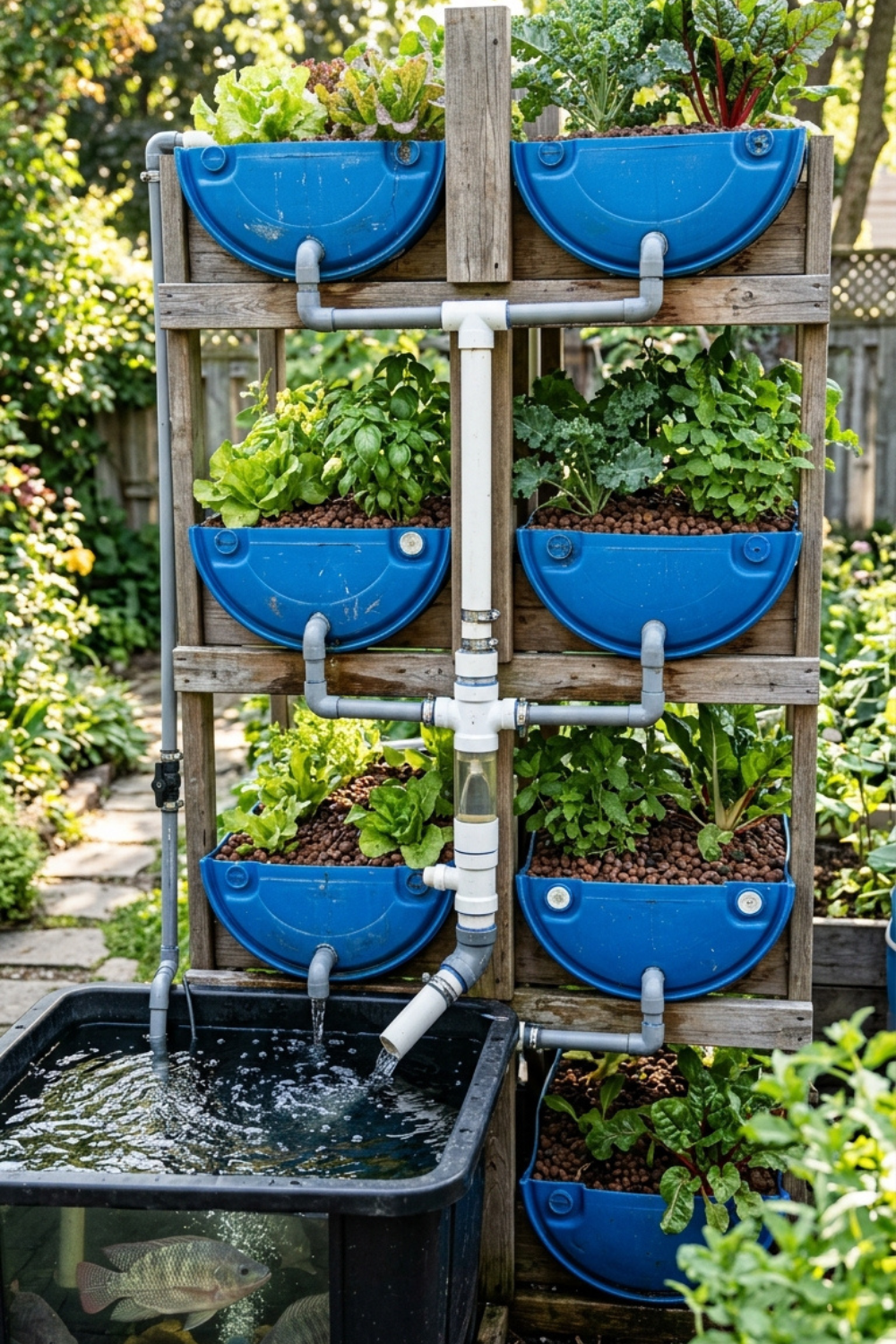
15. Raised Bed Conversion With Pond Liner
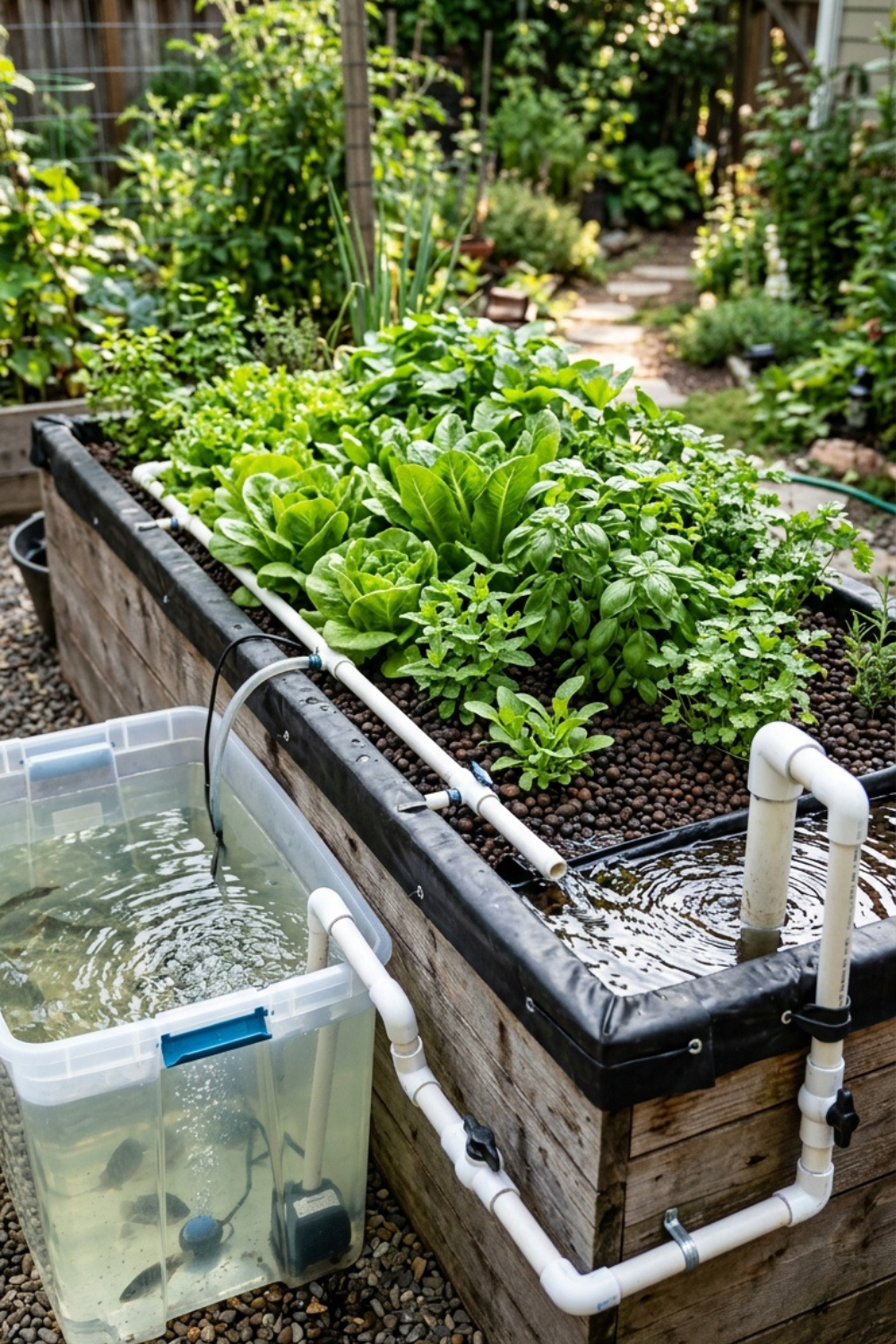
If fire ants, poor soil, or bad drainage have made a traditional raised garden bed frustrating, this idea repurposes that same wooden bed: line it with pond liner so it holds water, and plumb it to a nearby fish tank. It's a genuinely clever way to reuse garden infrastructure you already have instead of starting from scratch.
A Few Things I'd Tell Any Beginner Before Picking One
- Start smaller than you want to. I've watched more people get discouraged by an overambitious first build than by a tiny one. A mason jar or small tote system that works beats a big barrel system that leaks.
- Don't skip the bell siphon, but don't fear it either. It took me weeks to get my first one dialed in, and it's genuinely the fussiest part of most of these builds. Practicing with the water-bottle version (idea #3) before committing to a permanent one saved me a lot of frustration.
- Match your fish to your climate. Tilapia are the go-to beginner fish for warm climates because they're hardy and fast-growing, while goldfish suit smaller, cooler setups. I've had noticeably fewer problems running tilapia in warm weather than I did with more delicate species.
- Stick to leafy greens and herbs first. Basil, mint, lettuce, and cilantro have shallow roots and tolerate the nutrient swings of a newly cycled system far better than fruiting plants like tomatoes or peppers, which I'd genuinely wait to try until you've got a more established system running.

My Honest Recommendation
If you're picking your very first project from this list, go with the 30-gallon tote and grow bed build (#5) or the standard aquarium conversion (#6). Both are cheap, forgiving, sized right for a balcony or small yard, and use materials that are easy to replace if something goes wrong. Once that's running and cycled, the mason jar or IKEA basket builds make great second projects for extra counter or shelf space. Aquaponics rewards starting small and getting the basics right — the bigger, more ambitious builds on this list will still be there once you've got a few successful harvests behind you.
This list draws on my own experience building small-scale DIY aquaponics systems, along with widely used community project designs and aquaponics education resources.