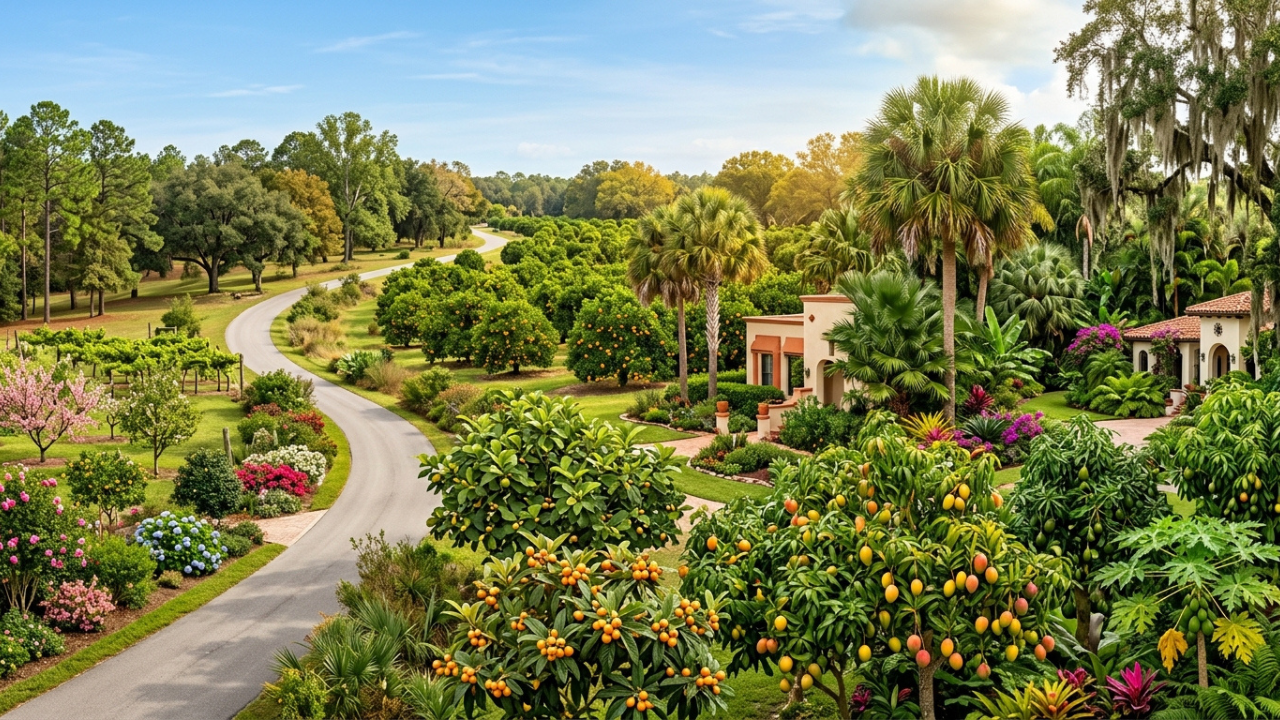
I've been growing fruit trees in Central Florida for years now, and I still remember planting my first tree — a citrus variety I picked without checking my zone — and watching it struggle through a cold snap it was never suited for. Florida's heat, humidity, and sandy soil look like obstacles on paper, but once you match the right tree to your part of the state, they actually work in your favor. This guide covers what I've grown successfully myself, backed up by University of Florida IFAS Extension research, so you're not guessing the way I did early on.

Know Your Zone Before You Plant Anything
This is the single most important step, and it's the one I skipped the first time. Florida isn't one climate — it's several, and what thrives in Miami will freeze to death in Tallahassee.
- North Florida (Zones 8b-9a): Occasional freezes down to 15-20°F. This is where low-chill stone fruits like peaches actually perform well, alongside cold-hardy citrus like satsumas grown in protected spots.
- Central Florida (Zones 9a-10a): Mild winters with lows around 25-30°F and hot, humid summers. This is the sweet spot for citrus, figs, mango, avocado, loquat, and guava — it's where I garden, and it's genuinely one of the most forgiving zones in the state.
- South Florida (Zones 10b-11): Rarely dips below 30°F, which makes it prime territory for mangoes, avocados, and other true tropicals, though the tradeoff is needing excellent drainage against heavy seasonal rains.
The general rule I've internalized after years of this: the further south you are, the more fruit species you can realistically grow. Use the USDA Hardiness Zone Finder for your zip code before you buy anything — mismatching a tree to your zone leads to poor pollination, weak yields, and disease vulnerability more often than any other beginner mistake.
The Fruit Trees That Actually Perform Here
1. Citrus (Oranges, Lemons, Limes)

Citrus is the tree most people picture when they think "Florida fruit," and for good reason — it's genuinely the easiest and fastest to get going for most homeowners. That said, it's a subtropical crop, which limits it to areas that don't regularly see hard freezes, so it does best throughout Central and South Florida. In my own yard, a Meyer lemon has been the standout: it's more cold-hardy than standard lemons, sweeter and less acidic, and productive almost year-round in Florida's mild climate. I grow mine in a large pot specifically so I can move it under cover during rare cold snaps.
2. Mango

I think of mango as the tree that rewards patience with genuine abundance. It thrives in hot, humid weather and handles Florida's sandy soils well, and once established, it's remarkably drought-tolerant. The catch is cold sensitivity — mature trees are cold-hardy to around 25°F, and young trees to 30°F, but temperatures below 40°F will kill flowers and fruit outright. If you're north of Orlando, I'd genuinely recommend keeping it in a large container so you can move it indoors during cold snaps rather than planting it directly in the ground. Prune it to a height no taller than 15 feet — it makes harvesting dramatically easier and keeps the tree more storm-resistant.
3. Avocado

Avocado has become one of my favorite trees to recommend because it thrives in warm, humid climates, matures quickly, and produces abundantly. Grafted trees can start producing fruit within just 3-4 years of planting, which is fast compared to a lot of other fruit trees. Cold hardiness varies quite a bit by variety — some can withstand temperatures into the 20s°F — so if you're further north, look specifically for Mexican-type avocados bred for better cold tolerance. I prune mine to 12-15 feet for the same reasons as mango: easier harvesting, less wind damage. One thing I watch closely is laurel wilt disease, spread by the ambrosia beetle — it's worth scouting for regularly rather than discovering it too late.
4. Fig

Figs have been one of the lowest-maintenance trees in my yard. They handle Central Florida's combination of hot summers and mild winters well, and they tolerate sandy soil better than a lot of alternatives people assume they need. I don't spray or fuss over mine nearly as much as my citrus, and it still produces reliably every season.
5. Peach (Low-Chill Varieties)

Peaches are the one entry on this list I'd steer specifically toward North Florida growers. Deciduous fruits in general do best in the northern part of the state, and low-chill peach varieties are bred to still get the winter chill hours they need even in Florida's milder cold season. If you're in Central or South Florida, I'd skip peaches — they simply won't get the cold exposure they need to fruit well.
6. Loquat

Loquat is genuinely under-appreciated, and I think it deserves more attention than it gets. It's one of the trees that performs reliably across a wide swath of Central Florida conditions, tolerates the sandy soil most of us are gardening in, and doesn't demand the intensive care regimen that citrus or avocado sometimes does.
7. Guava

Guava rounds out my "sweet spot" list for Central Florida. It handles heat and humidity easily, tolerates sandy soil, and in my experience produces reliably with minimal intervention once it's established — a good pick if you want fruit without a demanding maintenance schedule.
Trees I'd Approach More Carefully
Not everything marketed as "great for Florida" is a safe bet everywhere in the state. Lychee, for instance, actually requires cold, non-freezing temperatures to fruit well, which makes it a much better fit for South Florida microclimates than for Central or North Florida yards. I'd also flag that any tropical fruit tree — lychee, longan, true tropical mango varieties — benefits from careful site selection: proximity to water for frost protection, well-drained soil or raised beds, and a real plan for hurricane and flooding preparedness, since saturated soil is just as damaging to these trees as a freeze.
What I Do for Every Tree I Plant
- Full sun and well-drained soil, non-negotiable for citrus and most of the trees above.
- Fertilize on a schedule — I feed my citrus and mango three times a year, spring, summer, and early fall, using a fertilizer with the right micronutrients for the species.
- Prune after harvest to maintain shape and keep the tree at a manageable, storm-resistant height.
- Watch for pests early. Leaf miners on citrus and the ambrosia beetle on avocado are the two I check for most often, since catching them early is far easier than treating an established infestation.
- Have a cold-snap plan. Even in Central Florida, a hard freeze happens occasionally. Container-grown mango, avocado, and citrus give you the option to move trees under cover; in-ground trees need frost cloth or another protection strategy ready to go.
My Honest Recommendation
If I were starting a Florida fruit tree collection from scratch again, I'd begin with a Meyer lemon in a container — it's fast, forgiving, and rewarding almost immediately — then add a fig for low-maintenance reliability, and work up to mango and avocado once I had a feel for my yard's specific microclimate. Peaches only make sense if you're in North Florida; skip them everywhere else. Match the tree to your actual zone rather than what looks good in a nursery display, and Florida's climate genuinely does most of the hard work for you.
This guide is based on my own experience growing fruit trees in Central Florida, cross-referenced with University of Florida IFAS Extension research and published Florida horticulture resources.